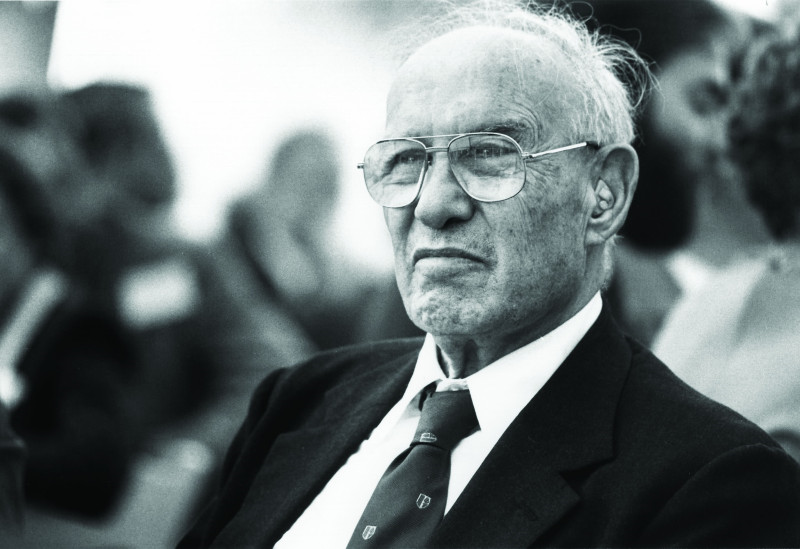
 “Management is doing things right. Leadership is doing the right thing.” This is a quote from Peter F Drucker, one of the most prestigious management consultants of his time. His books were required reading for me as a graduate student in business at the University of Toronto in 1962.
He was the key-note speaker at the 4th International Symposium on Small Business in Seoul, Korea in the fall of 1977. From his address, I had my first grasp of how geopolitics and the cold war impact business, and how it created what we today call the global economy.
What must change for American business, according to Drucker, was the development of “production sharing”. Everyone then understood the concept of selling resources or finished airplanes around the world, but the idea of selling components to your own subsidiary in Manila and assembling the final product there was something new.
Production sharing in 1977 was only ten percent of world trade but would be 50 percent in 1987, according to Peter Drucker. He was describing the foundation of today’s global economy.
But what electrified the audience, was a warning that if this is not encouraged by US governments, of all political stripes, nations of south-east Asia would go communist. Of course, only two years earlier, the Americans lost the war in South Vietnam.
“The biggest threat to the world is the armies of educated young people in all the developing nations that will be coming into the labour force over the next ten years. The cold war conflict with Russia and China is more than military power and control of the sea. It is really about people believing that their society can provide jobs and security.” I used that quote for twenty years back in Canada.
If Peter Drucker was alive today, he would credibly demolish the ideology of isolationism that is being promoted by the current President of the United States.
In my opinion “American isolationism” is a Russian agenda and a Chinese cold war opportunity.
Of course, the Symposium in Seoul was more than a look into the future of enterprise, but a better understanding of the cold war history of North and South Korea. Two nations created after WW2, with the north given to Russia and the South to the US.
And again, I learned how much more complex these issues are when you are on the ground. I met members of the Board of the Korean Small Business Association who had escaped from North Korea because of persecution of their Christian faith. Christians in North Korea? Those busy missionaries.
And I also discovered that the north was mountainous with lots of Japanese heavy industry and that the South was predominantly agricultural. So, the focus at the Congress was all about developing heavy industry in the South and the role of small firms as subcontractors.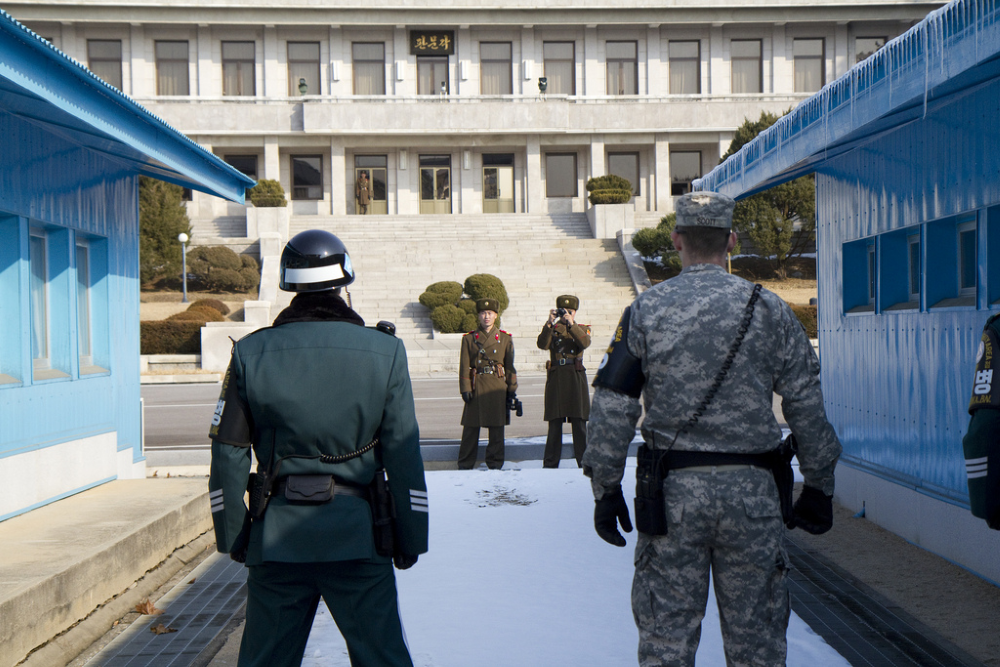 A big feature of the conference was tours to the Demilitarized Zone along the 38th Parallel that was the basis for the Armistice between North and South Korea after the Korean War. The photo shows one of the formal entry points into the North.
China was the big partner of North Korea during the Korea War, after the Chinese communists won their civil war. Russia provided equipment but not people, so they did not have direct confrontation with the US. A typical cold war strategy.
And one of the most breath-taking geopolitical moves was Russia declaring war against Japan three days after the Americans dropped their second atomic bomb in 1945. They immediately sent troops into Korea. And that is how they got control of the North.
One thing you learn about geopolitics is that it is about the kind of long-term strategic thinking you must do to protect your interests. Hard to do this effectively in western democracies when the focus of politicians is all about getting re-elected and raising funds.
01-02 South Korea
(blank) » John Bulloch » 12 Israel » 01 Understanding »