Sometimes you can explain a serious and complex issue with a story. It was a visit to Grenada in 2019, as part of a cruise in the Southern Caribbean, that I was thrown back to the cold war politics of October 1983 when the United States invaded Grenada.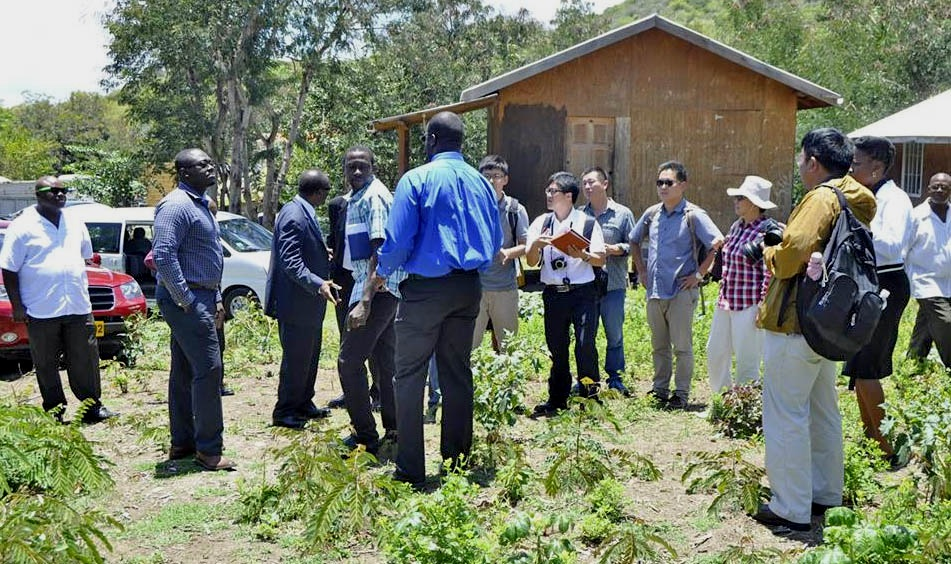 What started it all was the tour guide talking about all the homes around the island with red rooves, built by the Chinese for the poor. Then she pointed out the magnificent sports stadium, also built by the Chinese.
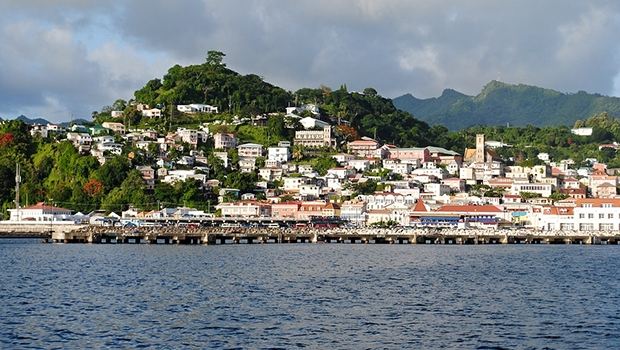 Well, that was just the beginning. There were roads, rail lines and the deep-water port that encourages large cruise lines to establish Grenada as a stopping point. And, apparently, there are plans to establish a direct air linkage to major cities in China. This is designed to encourage Chinese tourism.
If you have only heard of Grenada, it is probably a reference to it being a “spice island”. And in previous visits my wife has stocked up on spice packages as gifts. You can actually touch the pods that hold the nutmeg driving along the country roads. A very lush and mountainous island, but with lots of great beaches.
The question for me was China’s strategic interest. Building alliances and friendships in America’s back yard? Creating a strong trading partner? Or is it an alliance with a left-wing government in nearby Venezuela that has a monster supply of conventional oil, tar sands and natural gas? Energy needed by China.
It also may be helpful for China to be able to bring up the US invasion of Grenada in 1983, every time the US criticizes China for its aggressive activities to exercise control over islands in the South China Sea. Increasingly China is being seen as a future threat to the US and the West.
But back in 1983, the US invasion of Grenada was clearly an exercise in geopolitics. There was not only a pro-Russia government in place, but an airport being built using Cuban workers. And to my dismay I discovered that the airport was designed by a Canadian firm, thanks to Canada’s Prime Minister, Pierre Trudeau.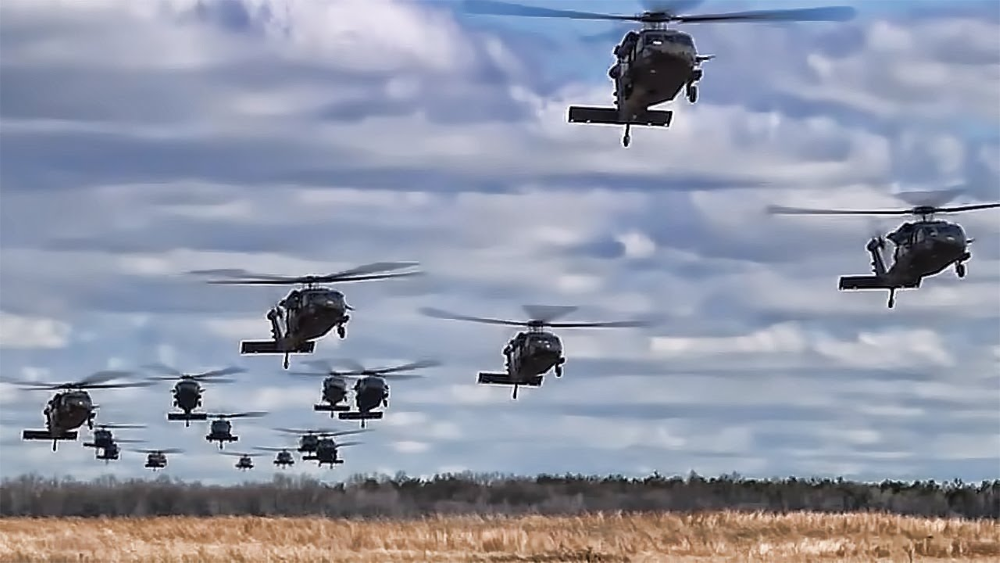 The US invasion force was about 7600 and the photo shows the first military use of the US Black Hawk helicopters. The Americans claimed rightly that this airport was designed to handle large cargo and military craft and was too big for the normal use of an island economy.
The current China investment looks different. It is multi-layered and clearly designed to earn widespread public support. But it is financed and built by a state-owned investment company in China, which means its investments are part of the geopolitics of China.
We have the same kind of Crown Corporation in Canada that makes strategic investments to not only help people abroad but to help them buy stuff from us. Public investment, then leads to private investment, then to trade and then to tourism. Hopefully, that is.
Now, the story gets interesting. All governments need a cover story when they engage in questionable activities. The US-Grenada story was the need to rescue 140 students from the local St George University. No one I knew bought this jazz.
Britain was really angered with the American action, and deeply opposed the invasion. Grenada, after all, was a former colony. Both Canada and Britain voted against the US at the United Nations. This was really something at the time.
I understood the US geopolitical interest in Grenada coming under control of Russia, because it was an island close to Aruba that was home to the world’s largest refinery. It was owned by Standard Oil (ESSO), and I interviewed them for an Aruba job when I was a fourth-year engineering student in 1956.
No need to worry about the security of Venezuela as a source of oil for the US anymore. The US is self-sufficient in energy. Venezuela is now a strategic interest of China. Lucky them.
But geopolitics has long-term consequences. Ever since the US invasion of Grenada to fight the threat of Communist Russia, there has been a strong left-wing anti-US political constituency in Grenada. The result is an island that is now part of the cold war or geopolitics of another Communist nation, China.
01-01 Grenada
(blank) » John Bulloch » 12 Israel » 01 Understanding »