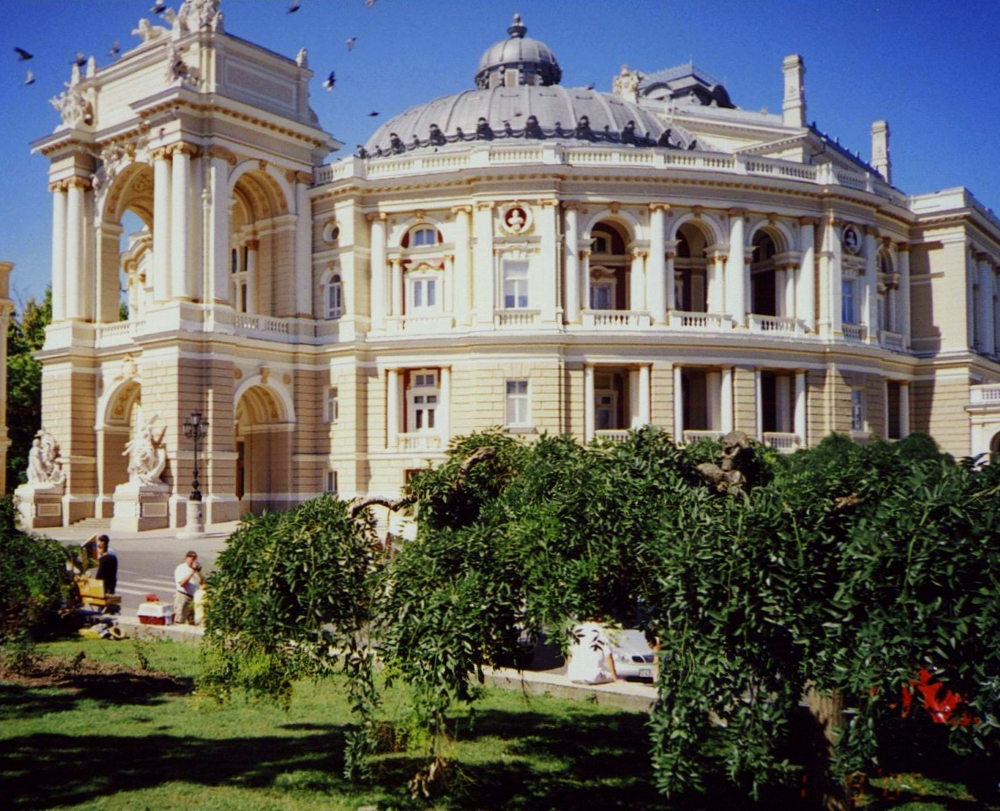
 The Opera House in Odessa, on the Black Sea, was a spectacular structure and Mary and I had box seats for a breathtaking performance for only $2 US each. And yet our seat covers were worn down to the canvas below, and the curtain on the stage was both worn and filthy.
Odessa was the first stop in the Ukraine and it was at the time an important military port for Russia. It was not a surprise that Russia, on losing its relationship with the Ukraine in later years, would seize control of Crimea.
The big surprise was visiting a city with so much history and beautiful architecture, and then travelling just a few miles outside the city and being confronted by ugly monster-sized apartment blocks. Contrast, contrasts.
That is the only way to describe our trip to the Soviet Union in 1987. A story of a people and a culture before and after Communism.
Our tour guide was an interesting person that knew nothing about what she was doing. She was, without having any choice, thrust into the job because they were short of people who could speak English. Our guide was an English professor at the Moscow State University.
I asked her if she had ever been to London, and she said that although she had never visited the city, she had, as part of her studies, learned the names of all the shops on the many streets heading into Piccadilly Circus. Hmmm.
A highlight of our trip to Odessa, was a side trip to Moldova, which even the tour guide called a Romanian province under Russian rule. What a beautiful part of the world. I have two vivid memories. First, every older lady looked like my Jewish grandmother. And second, the wine was delicious.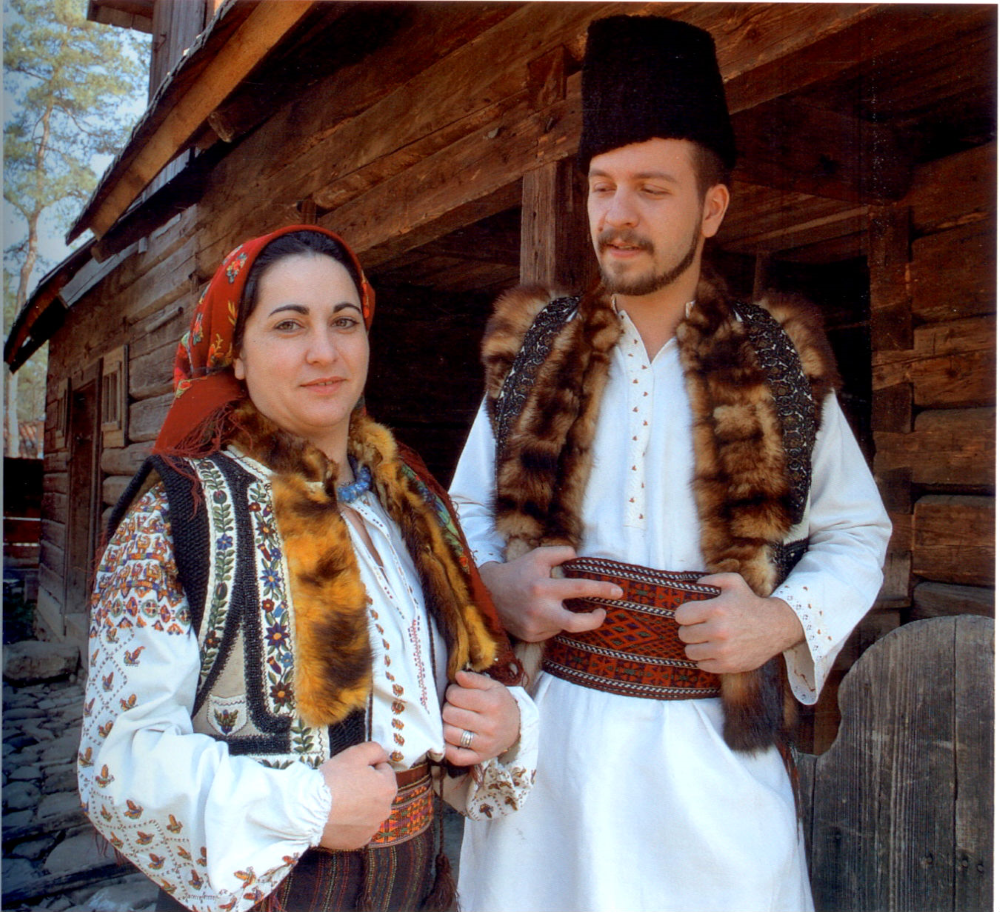 We had some entertainment at our first stop and enjoyed music and dancing with a small group wearing traditional costumes not unlike the couple in the photo.
My grandmother was born in the city of Jassy, called Iasi today, which is the second largest city in Romania. But back in history, Jassy was part of Moldova. The history guide book also described Jassy as a centre of antisemitism in the late 1800s and that is when my grandmother and family emigrated to the UK.
From our visit to Odessa and Moldova we headed by train to the capital city of Kiev, and the train trip was an experience. We had a cabin with eight of our tour members, but it lacked any movement of fresh air.
So, a couple of us tried to raise the window in the corridor. And to our surprise the whole window and frame just came away from the coach wall leaving a monster hole of about 6 feet square.
But it was so interesting passing hundreds of miles of wheat fields, with local farmers painting their homes a different colour on each side. And what we all noticed was no private vegetable gardens or chickens running about. Everyone worked on collective farms with all forms of private enterprise strictly forbidden.
Our first worry about visiting Kiev was the 1986 explosion at the nuclear power station at Chernobyl, which was not that far away. We were assured that Kiev was not in any danger.
Our real worry turned out to be dysentery which hit everyone on the tour bus. Spoiled horsemeat was what we thought we had eaten.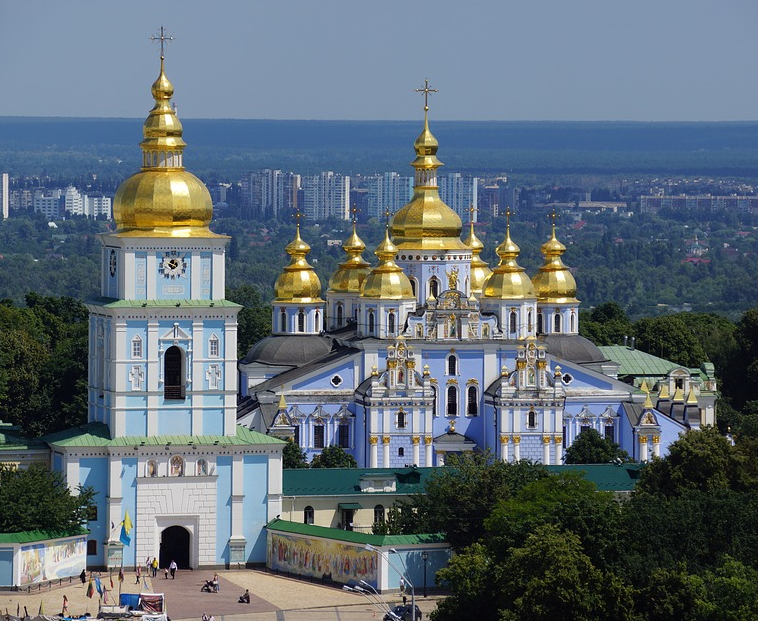 Kiev, nevertheless, was a joy, and the photo of the famous Mother of God Assumption Church only one of their many historic sites. Lots of “hussle bussle” as we like to call it. Everyone walking quickly and with purpose.
And what was the biggest bit of fun was being offered large tins of beluga caviar for only $10 US by every waiter in every hotel and in every restaurant in Kiev. Something we would spend ten times over to buy in Canada. We bought one, of course.
Judging by the impact Ukrainian immigrants have made to the economies of Saskatchewan and Manitoba in Canada, there was no doubt in my mind that the Ukraine could make it on its own without so-called mother Russia.
01-02 The Ukraine and Moldova
(blank) » John Bulloch » 13 Russia » 01 Communism »