We were engaged to be married in 1955, and with great excitement, my grandfather helped me buy an engagement ring from a jewellery wholesaler. Both the ring and the diamond came from Israel. At the time, the only product I identified with Israel was Jaffa oranges.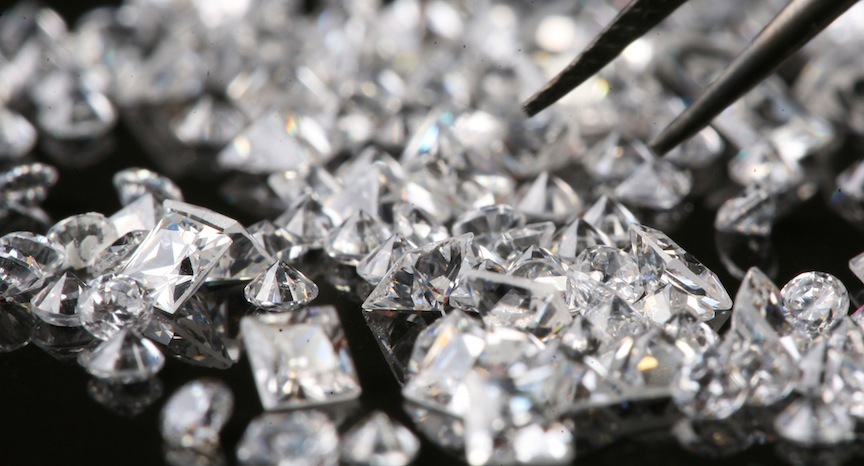 My Jewish grandfather sold sandwiches and coffee on the Canadian National Railway route between Toronto and Winnipeg. But after his primary duties were completed, he took out a display case of diamond jewellery and started to make some real money. And it was from my grandfather that I learned about clarity, colour, cuts and carats.
Hard to believe today, with Israel exporting about $100 billion of goods and services, that diamond exports make up $7 billion. They are the big players in the business of cutting and polishing diamonds using groundbreaking laser technology.
Attending the International Symposium on Small Business (ISBC) in Tel Aviv in 1995, we were told by an Israeli official that Israel was an innovation economy because it had so many problems to solve in its history. And that their future was handicapped because they had to spend so much of their wealth on imported energy and defence.
No one at the time knew that Israel would make significant discoveries of natural gas off its coast and that it would not only provide the energy source for producing low-cost electricity but that they would export it to Jordon.
My active involvement in the ISBC was during the period 1975 to 1995, and it was not hard to identify the smaller nations that would make an impact on the world.
To me, they would be South Korea, Israel, Singapore and Holland. They all had similar cultures. Their people admired entrepreneurship, new venture formation, technology, innovation and trade. And they all worked together for the benefit of themselves and their society. This, of course, is the success formula that attracts investors from around the world.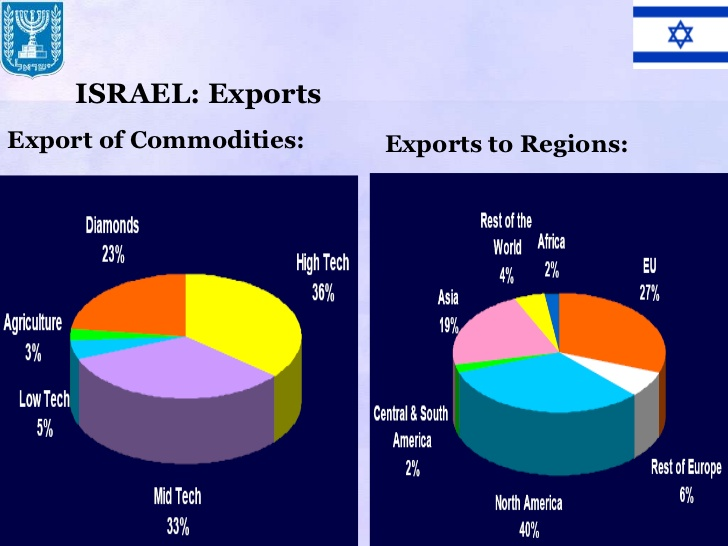 The chart clearly shows just how complex and diversified today’s Israel has become. They are considered an economic powerhouse.
A lot of their growth is pure economics 101: A highly educated workforce, strategic partnerships with global companies, upgrading imported technologies, and finally, exporting their products and know-how to the world. It is the Israel story of desalination plants and military aircraft.
And like the US, Israel has a military-industrial complex with military spending and military innovations transferred to the private sector. In the world of trade law, efforts are made to identify trade subsidies that are a no-no. Research and military spending is allowed.
When I look back into the history of the Jewish side of our family, I see a pattern of adaptable people mostly engaged as merchants. There was a time when families of eight to ten children all worked in family businesses, and their children found it psychologically credible to also start their own business. But this story is no different than the stories of overseas Chinese and their history of enterprise and innovation. Jewish culture is not unique.
What is so different about Israel today is that its challenges will never go away. The majority population is not having babies while its ultra-religious and Palestinian minorities are having large families. It faces Shite Arab nations that want to destroy them. And most difficult of all is the conflict with its Palestinian neighbours. Israel must get stronger and stronger.
But its opportunities to use its inherent adaptability are unlimited. While the future of fossil fuels is one of decline and the future economies of its Arab neighbours are also in decline, Israel will be producing surplus quantities of water and turning deserts into cities.
They will be world leaders in the export of desalination technology during a period of global freshwater shortages. Now that is economic development.
02-01 Economic
(blank) » John Bulloch » 12 Israel » 02 Power »