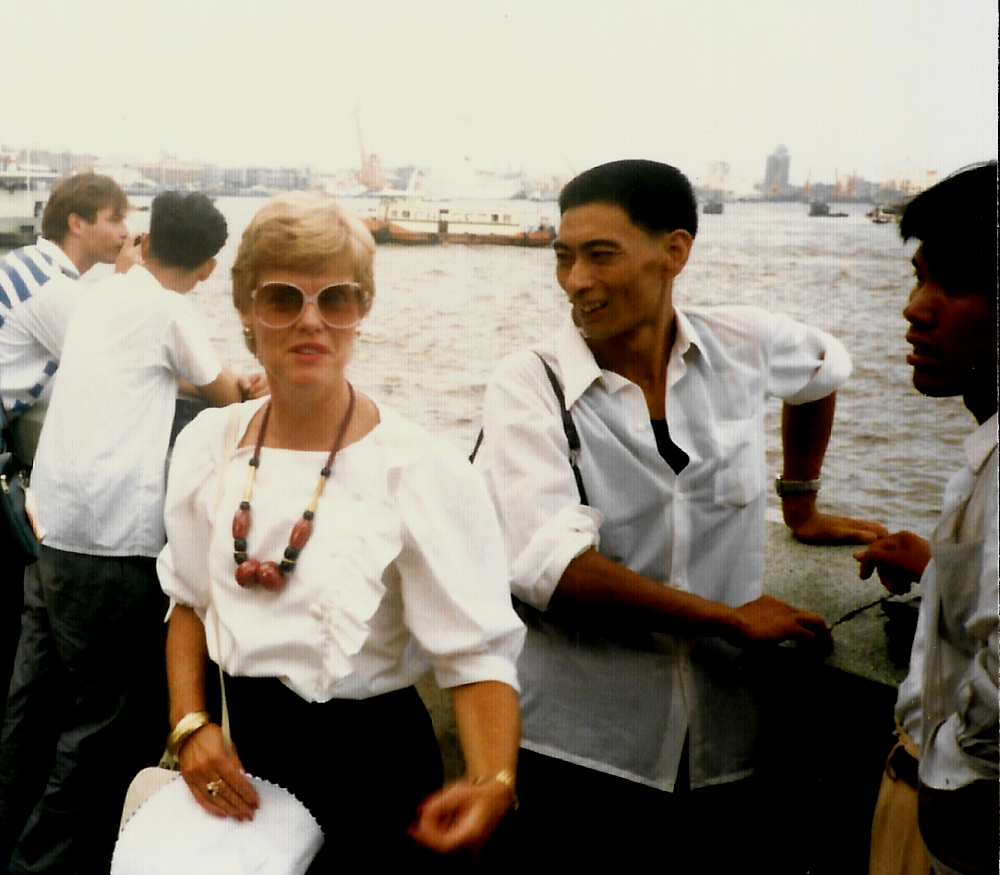
 Ah, Canada! Ah, Norman Bethune. This is what we heard from young Chinese students who approached us and asked if we could chat so they could practise their English. It was during a two-week tour of China on our 30th wedding anniversary in 1985. The photo shows my wife Mary talking to young people in Shanghai.
These young people recognized the Canadian pin we wore wherever we went. I gave out several hundred to young Chinese, who acted as if they had received a valuable treasure.
Some powerful lessons for the future were learned during this trip. To meet so many young people learning English and speaking the language without a trace of an accent meant a government with a long-term policy of preparing to compete head-on with the English-speaking world, the United States in particular. Apparently, there are about 300 million Chinese learning English.
The other big lesson was their respect for Canadians because we lived in the same country as their hero, Dr. Norman Bethune, who worked with Mao Zedong during his great march. I knew of Dr. Bethune because he was born in Gravenhurst, Ontario where my folks had their cottage. Bethune died of blood poisoning at the age of 49 and is buried in China.
Another thing I learned about the Chinese is how adaptable and entrepreneurial they are as a culture. Change was taking place at an incredible pace, and I had a sense back in 1985 that China would become a world power.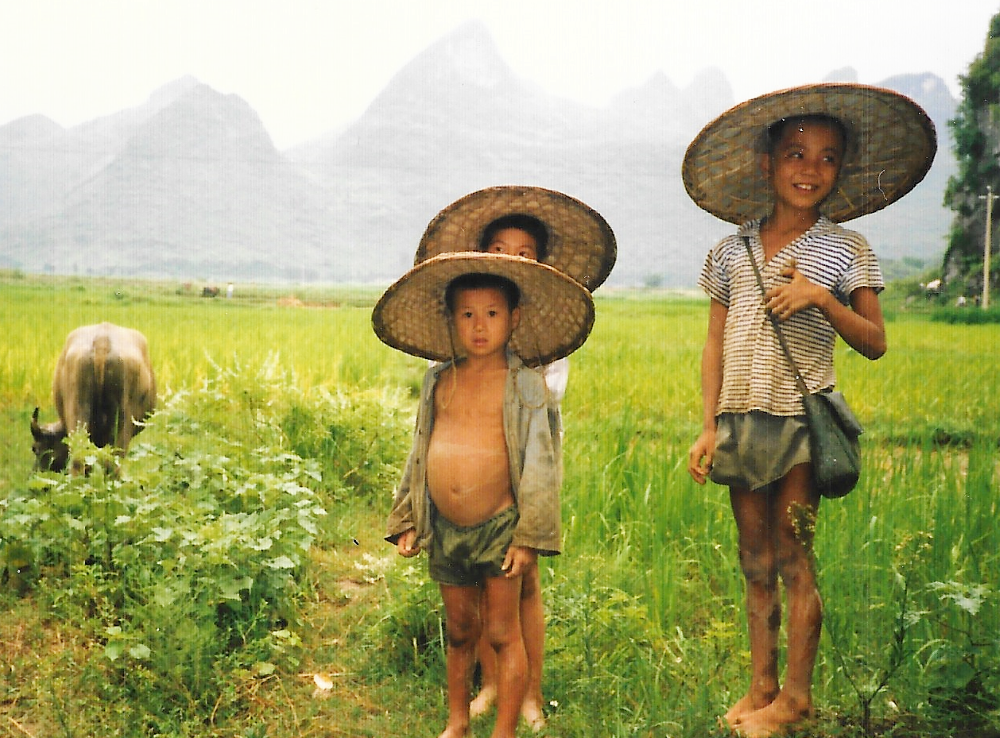 But China is also a nation of contrasts with poverty in the countryside and great wealth in the large cities of the east. The photo was taken from the window of our bus driving through central China and shows children working on the family farm.
There is much beauty and wide-open spaces in China, but large cities like Beijing, with its massive population, was full of congestion and polluted air, and people wearing gauze face masks.
I had talked to business colleagues in Australia when they were negotiating a free trade agreement with China. It was a ten-year process with a deal signed in 2015. 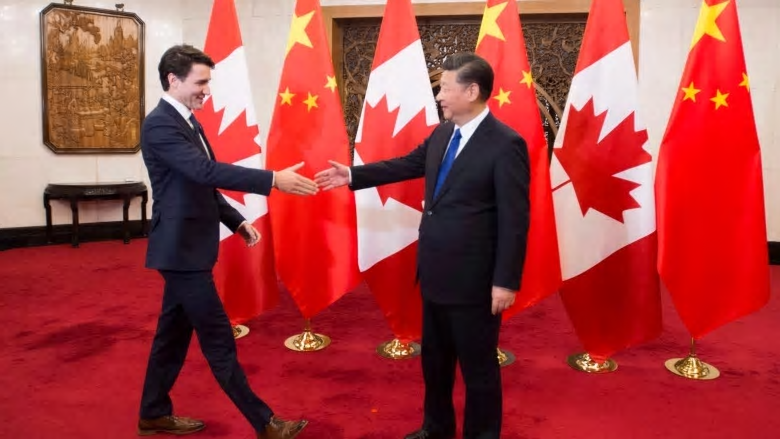 So, it will not be a surprise if Canada reaches a new formalized economic arrangement with China. The recent photo of Prime Minister Justin Trudeau with Chinese President Xi Jinping is promising.
I am old enough to remember China as an ally in WW2, but then an enemy during the Korea war in 1951. Taiwan, on the other hand, was always the friendly free enterprise offshoot of China. Today, Canadians think of both Taiwan and China as friends.
From a purely legal position, China and Taiwan are not supposed to be doing business with each other, but in 1985 when I was in Taiwan, following my tour of China, I discovered that they did over a billion dollars worth of trade by directing the movement of goods through Hong Kong and Singapore. Pragmatic. That’s the best way to understand China and the Chinese people. Rabidly capitalistic in a communist-led political dictatorship.
We have a huge trade deficit in goods with China. No surprise there. But on services like travel, the trading relationship is relatively balanced. Love watching those busloads of Chinese visiting the casino near Barrie, Ontario. They say Chinese love to gamble.
It was soon after I had retired from the Canadian Federation of Independent Business in 1999, that Mary and I took up ballroom dancing. There we met three couples from mainland China who were working here as part of an investment in our country. And they were taking up ballroom dancing to familiarize themselves with the way we did things and the way we lived. Bloody amazing.
The future relationship between Canada and China will always be strong because the Chinese people are so flexible and pragmatic. It is why they make an impact no matter where they live in this world.
02-01 Understanding
(blank) » John Bulloch » 11 Emerging Powers » 02 China »