It is hard to understand your own country or your own organization until you try to get your head around other nations, other cultures and other organizations. My most significant learning experience was the International Symposium on Small Business held in Tokyo, Japan in 1975.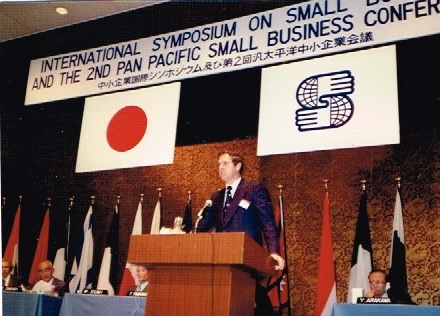 I chaired a session on the differences in small business in Europe. North America and Asia. What I learned, and it is something few understand today, that the structure of a small business sector varies enormously depending on the policies governments pursue over time, a nation’s history and its culture.
A large number of small breweries and bakeries in Germany are a product of their apprenticeship system. And the substantial subcontracting sector in Japan is a product of their legislation on subcontracting which encourages large firms to train and finance smaller suppliers. And the high births and deaths of small firms in the US are a product of a culture that does not put a stigma on failure.
I noticed a small firm in Japan with a huge sign hanging out front. It was a signal that the firm was in difficulty. What was so amazing were all the different people that were giving assistance to the owner, including a competitor.
It is of particular interest that North American entrepreneurs start about six firms in their lifetime, but in Japan the number is one to two. North America, as a result, is more dynamic whereas Japan is more efficient.
What I learned in 1975 impacted my life because it gave purpose to the Canadian Federation of Independent Business (CFIB). What it all meant to me was that if we wanted to create a society that is more competitive with the rest of the world, we must create a small business sector that is more technological, more international and more entrepreneurial. And that is what we did. Or what the CFIB encouraged governments to do over a period of forty years.
What is so interesting about all the Asian countries is that they send large numbers of their students to study in the US and Europe, so that experts are available to help Asian business people understand the language and culture of North America and Europe.
A US PhD graduate told me, when I asked about the large retail sector in Japan, that an inefficient retail sector creates all kinds of jobs, and that these jobs are a more efficient alternative to what he called “western welfare”.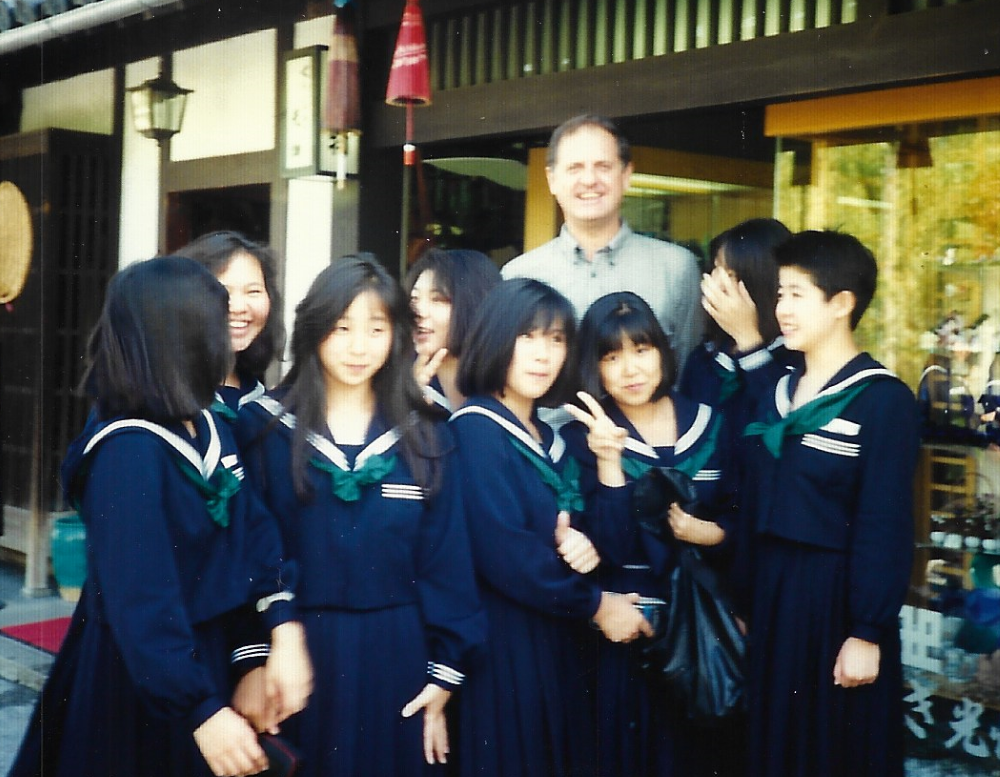 Something I loved about Japan was the way in which they have leapt into the modern world of technology but still protect their ancient culture. Kyoto, the old capital of Japan, is the place where great architecture and Japanese culture is preserved. I love the photo taken of me with a group of high school girls. They are all dead serious when posing for a photo, but break out laughing once the picture has been taken.
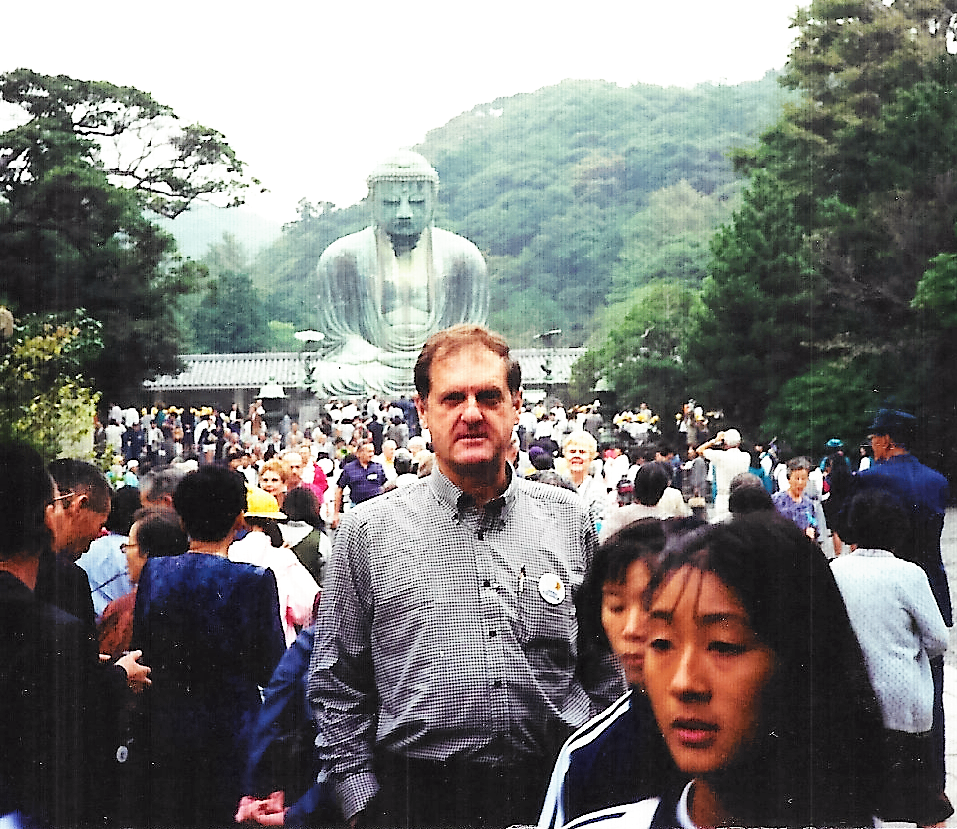 I asked a tour guide in Japan about Japanese religion, and he said most young Japanese are followers of the Shinto religion but change to Buddism as they age because of the promise of eternal life. The photo taken of the great Buddha of Kamakura is a keeper.
And the tour guide was a story itself. He was a guide and a bus driver, fluent in Japanese and English. He was highly educated and knew all you would want to know about Japanese history. Talk about productivity. That is Japan in a nutshell.
Another part of my Japanese experience was receiving delegations of about 300 Japanese small business owners each year that had won an award or special recognition; things like product design, sales growth or productivity. I was amazed to notice that over a period of ten years, none of the winners were women. It was my first inclination that Japanese society was holding back its women in some manner.
During three extended visits to Japan over the years, I learned to enjoy Japanese food. And one of the amazing experiences was visiting the food sections of their department stores. They were two floors of the most exotic foodstuffs, exquisitely prepared and beautifully displayed. They love to boast that they will eat anything with four legs except tables.
The current Japanese challenge is to find a way to make jellyfish tasty. And jellyfish are exploding in population because of global warming. Jellyfish on toast. I don’t think so.
03-01 Personal
(blank) » John Bulloch » 11 Emerging Powers » 03 Japan »