The CFIB research function under Pat Johnston made history in 1979, when we published solid data, showing that small firms were creating the majority of the new jobs in the economy.
And using unpublished 1979 data from Statistics Canada's Business Finance Division, CFIB's research department made history again by showing clearly how unfair the tax system is to small firms.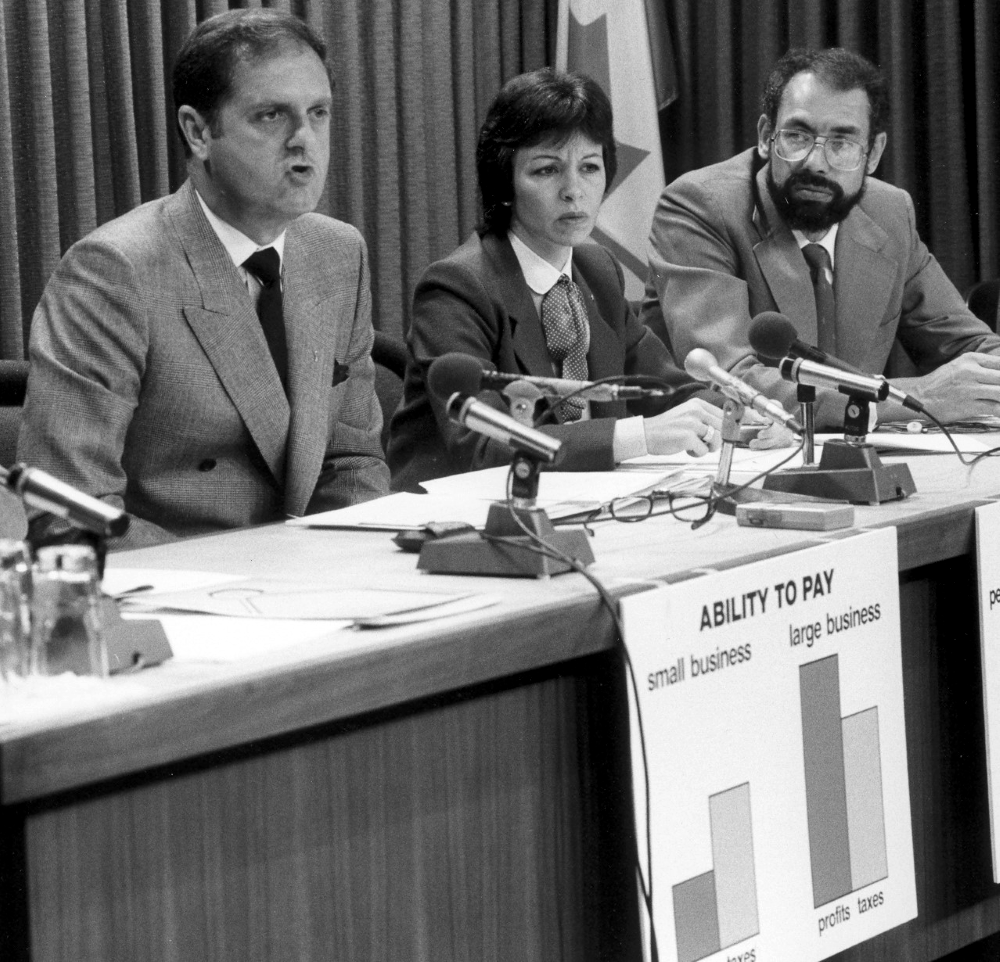 The study's conclusions were published and promoted at a press conference that shows me with Marianne Antoniak, our Director of National Affairs, and Richard Weitfeldt, our Director of Research.
Small firms, according to the research, pay a higher burden of indirect taxes (property taxes, business taxes, license fees etc.) and a higher burden of payroll taxes (EI premiums, CPP premiums, special payroll levies for health care, workers’ compensation and so on) than large firms.
Small firms with less than $5M in sales earned about 21% of all the profits by business of all sizes, and yet they pay 38% of all indirect taxes and payroll taxes. However, firms with more than $25M in sales earned 64% of all profits and paid a low 47% of all indirect and payroll taxes.
The publication of this data created a massive impact to the degree that Statistics Canada will no longer make this embarrassing data available to CFIB. They know the unfairness is even worse today, with so many large firms sending their labour-intensive manufacturing to places like China and Mexico.
Although this was a break-through study done in 1983, and based on 1979 data, it made CFIB's research function the foundation of CFIB's ongoing credibility. When Richard Weitfeldt died in 1986, we hired Catherine Swift as the new Director of Research who continued to build on the legacy of the past. Catherine became a Vice-President and then in 1996, President and CEO as my successor.
Governments continue to place taxes on labour and impose indirect taxes because they are hidden taxes. The scary lesson is that governments of all stripes will always put politics ahead of economics and fundamental fairness. Governments create the need for advocacy organizations like CFIB.